Car Running Costs: How to Work Out What Each Car in Your Household Really Costs
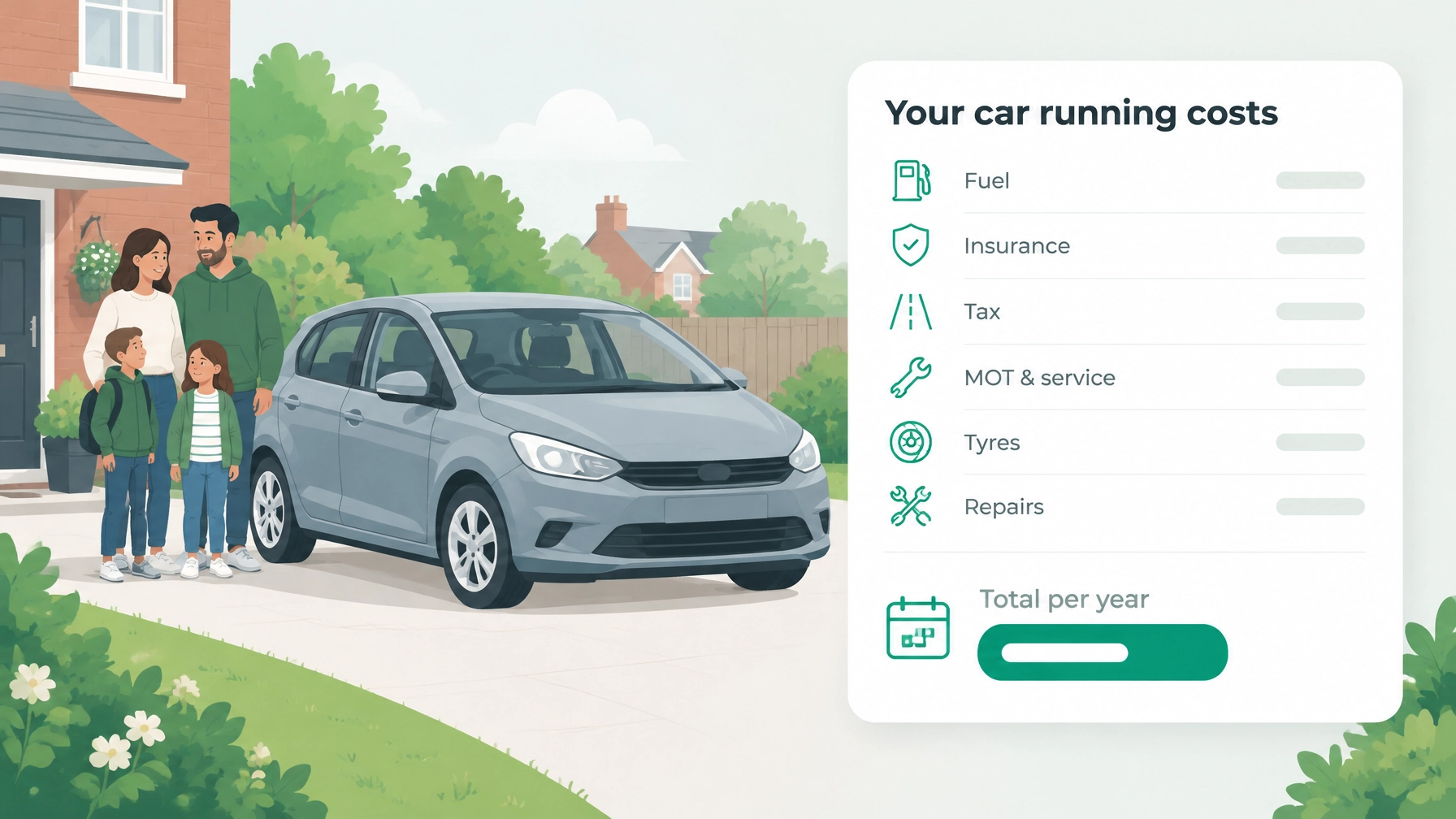
A car’s annual running costs include fuel, insurance, vehicle tax, MOTs, servicing, tyres and repairs, plus costs like parking, cleaning, breakdown cover, finance interest and depreciation. There’s no single figure that applies to every household: use your own bills and mileage to work out what each car costs per year, then divide by 12 for a monthly view.
A simple car running costs calculator can help you see where the money goes. The method below works with a spreadsheet, calculator or your own notes.
How to calculate vehicle running costs
Gather costs for the same 12-month period. Include what you pay during the year and, for a fuller picture of the true cost of owning a car, the value it loses over time.
- List each vehicle separately. Note its registration, annual mileage and the dates covered. If you have two cars, start two separate records rather than combining all the bills.
- Add the regular fixed costs. Record each car’s annual insurance premium, vehicle tax and breakdown cover. If you have finance, decide whether you’re calculating household cash outgoings or the full ownership cost. Don’t count the finance principal and depreciation as though they were separate costs; for a full ownership estimate, include depreciation and finance interest, not the principal repayment twice.
- Estimate annual fuel. Use the car’s miles per gallon (MPG), the miles it travels in a year and the price you pay per litre. The formula is:
Annual miles ÷ MPG × 4.546 × price per litre = estimated annual fuel cost.
For example, at 8,000 miles, 40 MPG and £1.50 a litre, the calculation is 8,000 ÷ 40 × 4.546 × £1.50 = about £1,364. That’s an illustration, not a typical cost. Your real MPG and fuel price may differ. - Allow for MOTs, servicing, tyres and repairs. Add actual bills where you have them. For costs that come round less often, set aside an annual share: a £360 service expected every 18 months, for example, works out at £240 per year. Keep a separate repair reserve if you can, as repairs don’t arrive on a neat schedule.
- Add the costs that are easy to forget. Include household or workplace parking, tolls, clean-air-zone charges, cleaning, finance interest and any other costs linked to that car.
- Estimate depreciation. Subtract the car’s likely sale value at the end of the period from its value at the start, then divide by the number of years you expect to own it. It’s an estimate, but it helps show costs that don’t appear in your monthly bank transactions.
- Total the figures. Divide the yearly total by 12 for an estimated monthly cost. If you want a cost per mile, divide the annual total by the miles driven that year.

An illustrative annual cost breakdown
Here’s a made-up example to show how the categories can add up. These figures are for illustration only, not real averages or a prediction for your car.
| Cost | Example for one year |
|---|---|
| Fuel | £1,364 |
| Insurance | £650 |
| Vehicle tax | £200 |
| MOT and servicing | £500 |
| Tyres | £150 |
| Repair reserve | £300 |
| Parking and tolls | £240 |
| Breakdown cover | £100 |
| Cleaning | £60 |
| Depreciation | £1,500 |
| Finance interest | £120 |
| Illustrative total | £5,184 |
In this example, the full ownership cost is about £432 a month. Your own result could be very different depending on your car, mileage, location and cover. Check your exact vehicle tax on GOV.UK’s vehicle tax rates page. The Vehicle Certification Agency explains the fuel-cost calculation and notes that fuel prices vary; its published consumption figures are useful for comparison, while your own fuel records show what you actually spend.
What often surprises people?
Depreciation can be a major cost
A car can lose value while it sits on the drive. Because depreciation isn’t a regular bill, it’s easy to leave out when you’re thinking about what the car costs. But if you want to compare the full cost of keeping one car against another, it belongs in the calculation.
Use a sensible estimate rather than treating it as an exact figure. What you paid, the car’s current condition and its eventual selling price all matter.

Similar cars can have very different costs
Two cars in one household might look alike on paper, but one may be driven much further, need more repairs or cost more to insure. A family total can hide that difference.
Compare each car’s annual total and cost per mile. That can help you spot where the money is going and decide what questions to ask at renewal, service time or when you’re considering replacing a vehicle.
Small habits can affect fuel use
Your route, traffic and driving style all influence real-world fuel economy. Where it’s safe and practical, smoother acceleration and braking may help avoid unnecessary fuel use. Keeping tyres at the pressure recommended by the manufacturer is another sensible routine check.
Official MPG figures can help you compare models, but they won’t necessarily match the mileage you get in everyday driving. Keep your own fuel and mileage records for a more useful household estimate.
See the cost of every car in your household
When you have one to four vehicles, it’s tempting to add every bill into one family total. But a per-car view is more useful: one vehicle might quietly cost twice as much as another, even if the overall household spending looks steady.
A simple record for each car can include:
- Annual mileage and fuel spend
- Insurance and vehicle tax
- MOT, servicing, tyres and repairs
- Parking, tolls, breakdown cover and cleaning
- Depreciation and finance interest, if you’re calculating full ownership cost
Motorlane Fleet can track fuel, repairs, tyres and other costs against each vehicle, then show cost per mile and real-world MPG. It also pulls MOT dates from the DVSA and sends reminders at 30, 14 and 7 days; it tracks dates and costs, while owners remain responsible for their vehicles. See how cost tracking works or explore the family vehicle features.
If you’re also working out van running costs, our guide to cost per mile for vans covers the separate work-vehicle angle.
General information only, not financial or legal advice. Check GOV.UK for current vehicle tax information and speak to your insurer about your cover.
Try Motorlane Fleet free for 14 days, with plans from £4.99 a month. See pricing.
Meta description: Use a car running costs calculator method to work out annual fuel, insurance, tax, MOT, servicing, repairs and depreciation for each car in your household.
Try Motorlane Fleet
Reminders, driver checks and accident help for your vehicles, all in one app.
Get started freeMore from the blog
How to Report a Car Accident in the UK: Who to Tell and What to Record
Find out how to report a car accident in the UK, who to contact, when police must be told and what details to record for your insurer or employer.
Read →How to Check and Renew Your Vehicle Tax (Without Losing Track Across Several Vehicles)
Check your vehicle tax for free on GOV.UK, renew it using a V11 or V5C, and keep track of tax dates across several cars or vans.
Read →What Happens If Your MOT Expires: The Practical To-Do List
MOT expired? Follow this practical checklist to check the date, book a test, sort tax and SORN, and understand when you can drive your vehicle.
Read →