How to Report a Car Accident in the UK: Who to Tell and What to Record
If you’re involved in a car accident, stop safely, exchange the required details with anyone affected, and tell your insurer as soon as you can, even if you don’t plan to claim. You may also need to report it to the police within 24 hours if you couldn’t exchange details or meet other reporting requirements.
What to do at the scene
Your first priority is safety. Don’t collect photos or details until it’s safe to do so. If anyone is injured or there’s immediate danger, call 999.
When things are safe, use this checklist:
- Stop safely. You must stop at the scene. Put your hazard lights on and move to a safe place if you can do so without creating further risk.
- Exchange details. Give your name, address and vehicle registration to anyone with reasonable grounds to ask. If the vehicle isn’t yours, provide the owner’s name and address too. Exchange insurer details as well where relevant, and make a note of the other driver’s information.
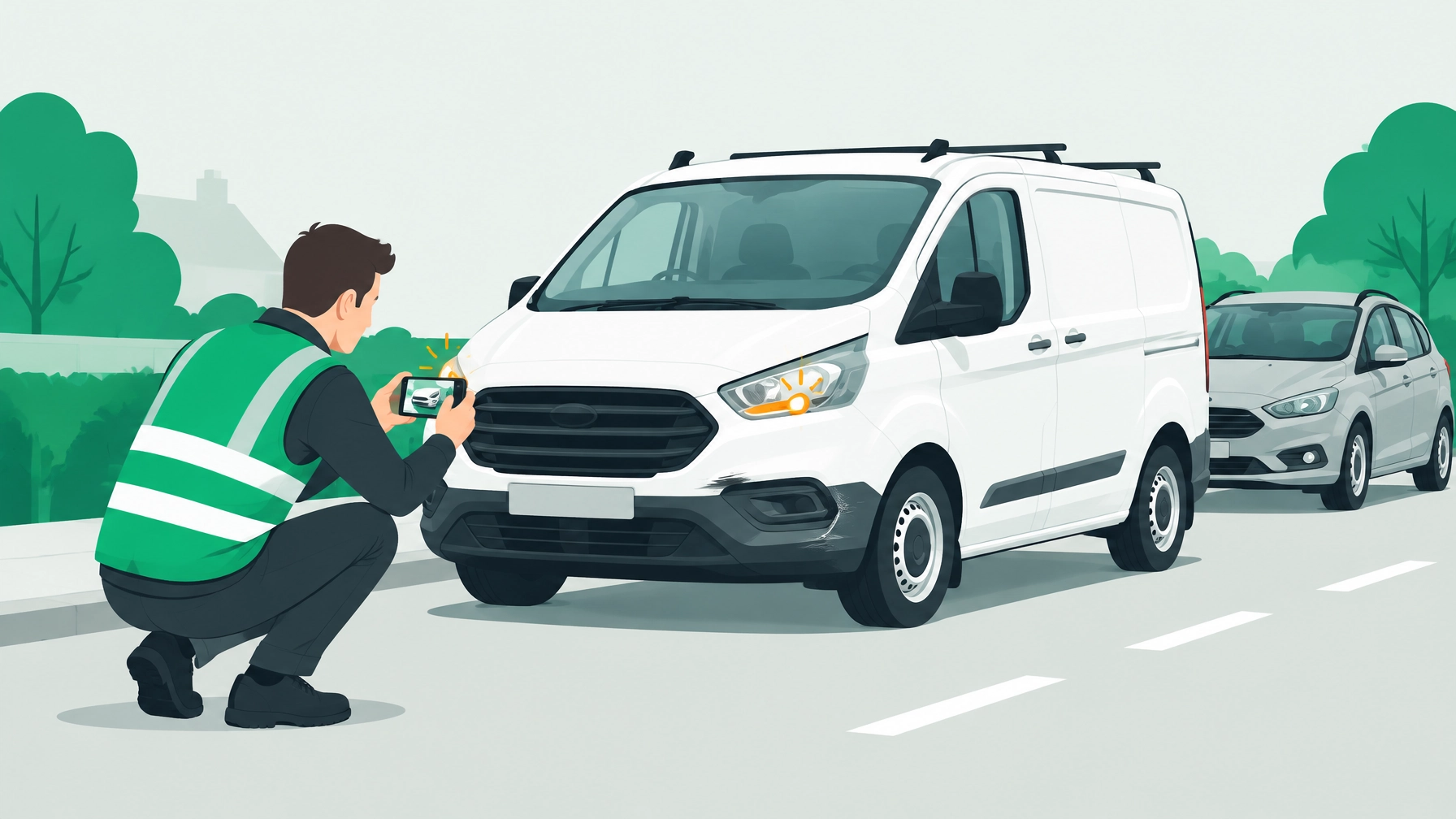
- Photograph the scene. Take pictures of vehicle positions, damage, number plates and the wider road or parking area. Include signs or markings if they help show what happened.
- Record witnesses and conditions. Ask witnesses for their names and contact details. Note the time, location, weather, lighting and road conditions while they’re fresh in your mind.
- Stick to facts. Don’t admit fault or argue about who caused the accident. Keep the conversation calm and let insurers assess what happened.
Only take photos or speak to witnesses if it’s safe. Don’t put yourself or anyone else in the path of traffic to get a better picture.

Who should you tell, and when?
Your insurer
Tell your insurer as soon as you can, even if you don’t intend to make a claim. GOV.UK says you must report an accident to your insurance company even if you’re not planning to claim. Check your policy for its notification process and any specific requirements.
Share the facts you recorded, including the other vehicle’s details, photographs, witness contacts and any police reference number. Keep a copy of what you send and note when you contacted the insurer.
The police
You don’t have to report every minor accident to the police, and police don’t attend every collision. GOV.UK says you must report an accident to the police within 24 hours if you don’t give your details at the time. Different circumstances can bring additional requirements, including where someone is injured and required insurance information hasn’t been provided.
If you’re unsure whether your situation must be reported, check the GOV.UK accident guidance. In an emergency, call 999. For a non-emergency, contact the police using the appropriate local channel.
Your employer, if you were driving for work
If you were using a work vehicle, report the accident to your employer promptly as well. Follow your workplace’s reporting process, even if the damage looks minor or you don’t think you’ll make an insurance claim.
A quick report lets the right person deal with the vehicle, insurer, customer or work schedule. It also means important details don’t get left in a driver’s glovebox or forgotten after a busy shift.
What should an accident report include?
A useful record is clear, factual and made as soon as you can after the incident. It should include:
- Date, time and exact location.
- Your vehicle’s registration and details of any other vehicles involved.
- Names and contact details of the drivers and witnesses.
- Insurer details, where available.
- Photos of the damage, number plates, vehicle positions and wider scene.
- A short account of what happened, in the order you remember it.
- Weather, lighting and road conditions.
- Any injuries or immediate safety concerns.
- The police incident reference, if you contacted the police.
- When you notified your insurer or employer, and any reference numbers they gave you.
Write down what you saw and did, rather than guessing about speed, distance or blame. If you remember something else later, add it as a separate note with the time you added it. Don’t edit or delete original photos or messages.

A complete record can help you answer questions from your insurer later, when small details may be harder to recall. It can also help your employer understand what happened and what needs sorting next. Reporting an accident doesn’t decide who was at fault; insurers consider the evidence and circumstances.
For a fuller step-by-step on staying safe, exchanging information and dealing with the aftermath, see our guide to what to do after a car or van accident.
Reporting an accident at work in a van
For a business, a clear reporting route helps a driver know who to contact and helps the right people act quickly. A report sent straight to a manager is easier to follow up than a note or photo that stays on someone’s phone.
Motorlane Fleet’s guided accident reporting lets drivers record details and photos on their phone and sends the report to the right people. It helps organise the response; it doesn’t replace a driver’s or vehicle owner’s responsibilities to follow the law, notify the insurer or report to police when required.
Whether you manage one work van or a growing fleet, agree in advance who drivers should contact and what information you need from them. Motorlane Fleet for small businesses is one option for keeping vehicle and driver admin in one place.
For other fleet tasks, you can explore driver management, vehicle reminders and running-cost tracking, or see options for larger fleets and families with several vehicles. You can also read our guides to van walkaround checks, MOT advisories and vehicle tax checks.
This is general information, not legal advice. Check GOV.UK and your insurer for guidance that applies to your circumstances.
Try Motorlane Fleet with a 14-day free trial, with plans from £4.99 a month. Drivers don’t need to download an app.
Try Motorlane Fleet
Reminders, driver checks and accident help for your vehicles, all in one app.
Get started freeMore from the blog
How to Check and Renew Your Vehicle Tax (Without Losing Track Across Several Vehicles)
Check your vehicle tax for free on GOV.UK, renew it using a V11 or V5C, and keep track of tax dates across several cars or vans.
Read →What Happens If Your MOT Expires: The Practical To-Do List
MOT expired? Follow this practical checklist to check the date, book a test, sort tax and SORN, and understand when you can drive your vehicle.
Read →Insurance Renewal Dates: How to Keep on Top of Them (and What Happens If You Don't)
Find your car insurance renewal date, build a simple reminder routine and understand what can happen if your cover lapses.
Read →