Insurance Renewal Dates: How to Keep on Top of Them (and What Happens If You Don't)
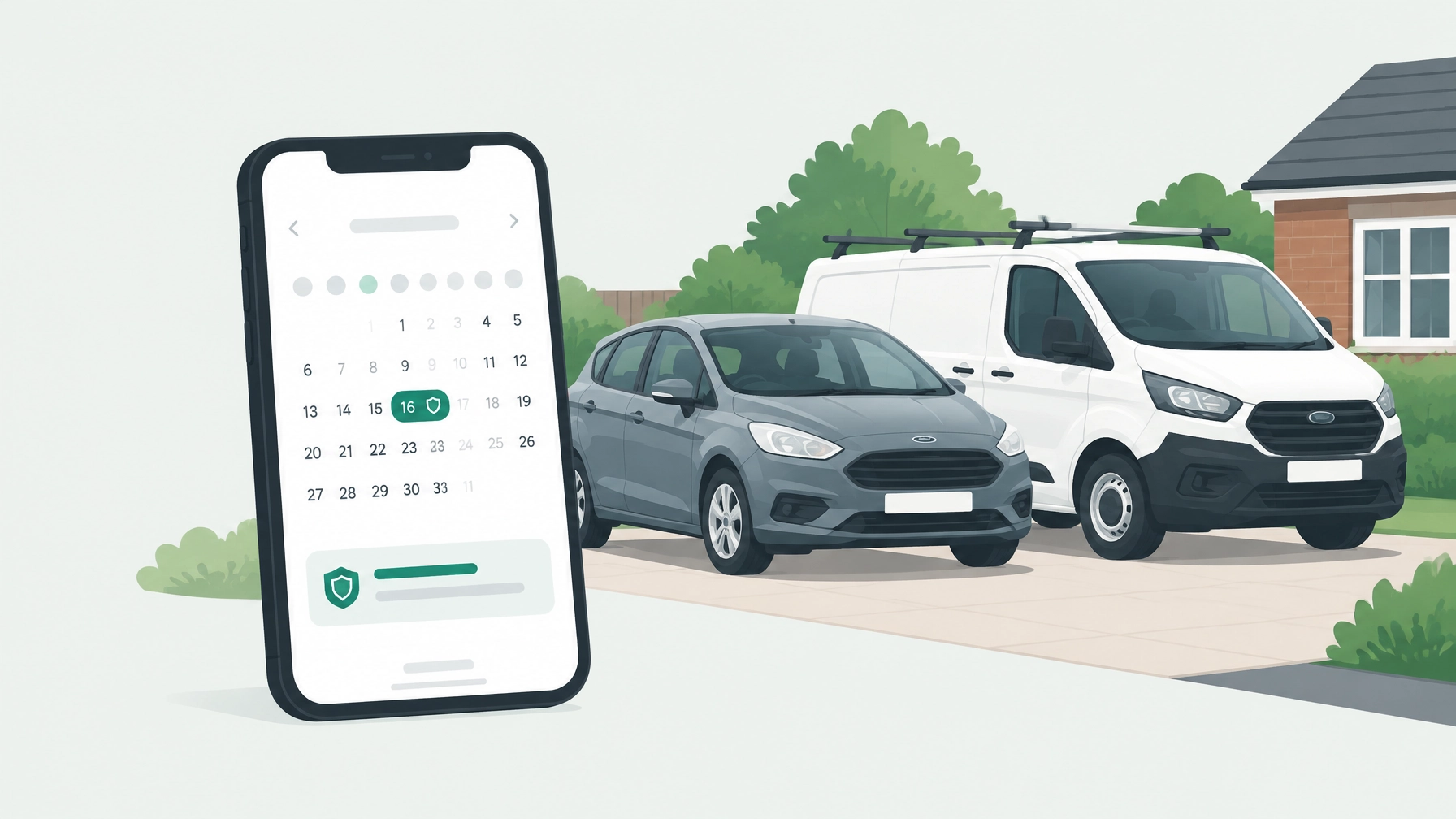
To remember your insurance renewal, write the date in your diary, keep it with your other vehicle dates, and check your policy documents or renewal emails. Then give yourself a few weeks to review your cover and arrange the next policy. If you manage several vehicles, keeping every date in one list can make renewals much easier to spot.
How to find your car insurance renewal date
Start with the documents or emails from your insurer. Look for the renewal invitation, policy schedule or certificate, and check the policy’s end date and time. If you can’t find them, contact your insurer or broker and ask them to confirm the date.
Most car insurance policies in the UK last for a year, but it’s the dates in your own policy that matter. Some policies renew automatically; others need you to arrange cover yourself. Check what your insurer has told you rather than assuming either way.
Unlike an MOT date, your insurance renewal date isn’t available through a central government vehicle check. You can check a vehicle’s MOT history online, but for your insurance date you’ll generally need to check your insurer’s documents, emails or account.

Why insurance renewal dates get missed
Insurance paperwork can arrive among all the other messages and letters you receive. If you have more than one vehicle, each policy may renew at a different time and through a different insurer.
There’s also no single DVLA service where you can look up every vehicle’s insurance renewal date. The Motor Insurance Database can help check whether a vehicle is showing as insured, but it isn’t a replacement for your policy documents or a reminder of when your current policy ends.
It’s easy to rely on an email prompt or auto-renewal, then overlook a change in your circumstances or the price of the next policy. A simple calendar entry gives you another prompt, and time to check the details.
What happens if your insurance lapses?
You must have motor insurance to use a vehicle on roads and in public places. In England, Scotland and Wales, the registered keeper generally needs to keep a vehicle insured even if it is not being driven, unless it has been declared off the road with a SORN (Statutory Off Road Notification).
That means leaving a vehicle parked on a public road without insurance can still cause a problem. If you’re keeping it off the road and don’t want to insure or tax it, check whether you need to make a SORN. A SORN vehicle must stay off public roads, apart from permitted journeys to or from a pre-booked MOT or other testing appointment.
The DVLA uses Continuous Insurance Enforcement to identify vehicles that appear to be uninsured and not declared off the road. Penalties can apply to the registered keeper. Driving without insurance is a separate offence, with its own consequences. Read the current rules on uninsured vehicles on GOV.UK and when you need to make a SORN.
A gap in cover may also affect future insurance quotes, depending on your circumstances and the insurer’s assessment. It doesn’t mean there will be a particular increase, but it’s another reason to plan ahead and avoid an unintended break in cover.
A few smart insurance renewal habits
A short routine can help you avoid a last-minute scramble:
- Note the date when you buy or renew. Add the policy end date to your calendar straight away, with an alert well beforehand.
- Start comparing around three to four weeks ahead. That gives you time to review the renewal offer and look at alternatives without rushing. Check that you’re comparing similar cover, excesses and add-ons.
- Check the auto-renewal setting. Find out whether your policy is set to renew automatically and how to change that. If you plan to switch, make sure replacement cover is arranged to start before your current policy ends.
- Keep all your vehicle dates together. Put insurance renewals alongside MOT, vehicle tax and service dates so they’re easier to review as a group.
If your policy renews automatically, check the renewal terms and the new policy details rather than treating the date as something you can forget. If you want to cancel or change cover, contact your insurer and follow its instructions. Cancellation and cooling-off rights can apply, but the details and any costs depend on the policy and circumstances.

Keeping track of several cars or vans
A household with two to four cars, or a business with several vans, can have renewals scattered across the year. Add MOTs, tax and servicing to the mix, and a date that seemed easy to remember can disappear among the others.
A single list makes it easier to see what’s coming up. You could use a shared calendar or spreadsheet, or keep the dates in a vehicle management tool. Motorlane Fleet lets you track insurance renewal dates alongside MOT, tax and service dates, with reminders ahead of each. You add insurance dates from your own policy documents, and you remain responsible for arranging suitable cover.
See how vehicle reminders work, or read our guide to checking vehicle tax. If you’re organising dates for a household or business, you can also explore Motorlane Fleet for families, small businesses and fleets.
A quick renewal checklist
Before your current policy ends, check that you have:
- Confirmed the policy end date and time.
- Reviewed the renewal offer and the cover it includes.
- Checked whether the policy will renew automatically.
- Arranged replacement cover before the existing cover ends, if you’re switching.
- Saved the new policy documents somewhere you can find them.
- Updated the date in your calendar or vehicle-date list.
If a vehicle will be uninsured, don’t assume it can simply remain parked on a public road. Check the GOV.UK guidance on insurance and SORN, and make sure the vehicle’s situation is correctly dealt with.
This is general information, not legal advice. Rules can differ in Northern Ireland; check GOV.UK and your insurer for guidance that applies to your circumstances.
Motorlane Fleet helps you keep insurance renewal dates alongside other important vehicle dates, with a 14-day free trial and plans from £4.99 a month. Drivers are always free, and there’s nothing for them to download.
Try Motorlane Fleet
Reminders, driver checks and accident help for your vehicles, all in one app.
Get started freeMore from the blog
How to Report a Car Accident in the UK: Who to Tell and What to Record
Find out how to report a car accident in the UK, who to contact, when police must be told and what details to record for your insurer or employer.
Read →How to Check and Renew Your Vehicle Tax (Without Losing Track Across Several Vehicles)
Check your vehicle tax for free on GOV.UK, renew it using a V11 or V5C, and keep track of tax dates across several cars or vans.
Read →What Happens If Your MOT Expires: The Practical To-Do List
MOT expired? Follow this practical checklist to check the date, book a test, sort tax and SORN, and understand when you can drive your vehicle.
Read →