Daily Vehicle Checks: What to Check, What the Law Says, and How to Make Them Stick
Meta description: Find out what to check each day, what UK rules say about driver checks, and how to make a simple vehicle-checking routine stick.
Daily vehicle checks help you spot problems before setting off. Check the lights, tyres and wheels, mirrors and glass, brakes, fluids and warning lights; if you’re driving a van, check the load is secure too. The law and record-keeping rules depend on the vehicle and how it’s used, but drivers remain responsible for making sure a vehicle is safe to drive.
Why daily vehicle checks matter
A quick check can flag a problem while it’s still easy to deal with: a tyre with a cut, a broken light or a load that could shift in transit. That matters whether you’re taking the family car out or sending a van to a job.
Checks also give drivers and whoever looks after the vehicles a chance to share information. If something needs attention, it can be reported before the next journey rather than discovered after a breakdown or roadside stop.
A check doesn’t guarantee a vehicle is roadworthy. And a current MOT doesn’t make an unsafe vehicle safe. The driver still needs to pay attention to how the vehicle looks and feels.

What the law says about driver checks
Drivers are responsible for making sure the vehicle they drive is roadworthy. GOV.UK advises drivers to check the windscreen, windows and mirrors are clean, the lights work and the brakes work every time they drive. It also recommends following the vehicle handbook for checks such as oil, coolant and tyres.
For cars and most light vans, there isn’t a general legal requirement for every driver to complete and keep a formal daily checklist. But driving an unroadworthy vehicle can still lead to prosecution. For cars and light vans, tyres must have at least 1.6mm of tread across the central three-quarters and around the full circumference.
There are more specific expectations for commercial vehicles. Under DVSA rules, documented daily defect checks are a licence condition for operators of HGVs and PSVs (buses and coaches). For vans used by a business with an operator licence, DVSA guidance says drivers should record and report defects found during the walkaround or during a journey. Keep the rules for your vehicle and operation in mind.
For official information, see GOV.UK’s guidance on checking your vehicle is safe to drive, van daily walkaround checks and commercial vehicle roadworthiness.
A simple 60-second daily walkround
A quick walkround is a useful first look, not a substitute for the checks required for your vehicle or a closer inspection when something looks wrong. Follow the handbook and use a safe, well-lit place to check.
- Walk around the vehicle. Look for obvious damage, loose panels, leaks or anything underneath that wasn’t there before.
- Check the lights and number plates. Look for damaged lenses, make sure the lights and indicators work, and check the plates are clean and readable.
- Look at the tyres and wheels. Check for visible damage, bulges, cuts or anything unusual. If you spot a problem, don’t assume it’s safe to drive.
- Check the glass and mirrors. Make sure the windscreen gives you a clear view and mirrors are clean, secure and usable.
- Secure the van’s load. Check it can’t move during the journey and that doors or other restraints are secure.
- In the cab, check the seat, belts and warning lights. Make sure the seat and belts are in good condition, then pay attention to any warning lights. Check the brakes feel and work as they should before setting off.
For the detailed list of items to inspect, see our van walkaround check guide.
Why checks get missed
Most missed checks aren’t down to drivers not caring. People are in a hurry, the van is needed for the first job of the day, or the process feels like another bit of paperwork.
Paper sheets can also be filled in later from memory. That makes it harder to know when a check happened, and defects can sit unnoticed if there’s no clear route for reporting them. A warning light or damaged tyre may only come to someone’s attention once it causes a bigger problem.
A useful process should be quick to start, clear about what to look at and easy to use when something needs reporting. It should also make it obvious who will follow up on a defect.
Paper or digital checks?
Paper can work well for a small number of vehicles if the forms are easy to find, completed at the time of the check and reviewed regularly. It may be less convenient when vehicles are shared, drivers work at different sites or records need to be checked later.
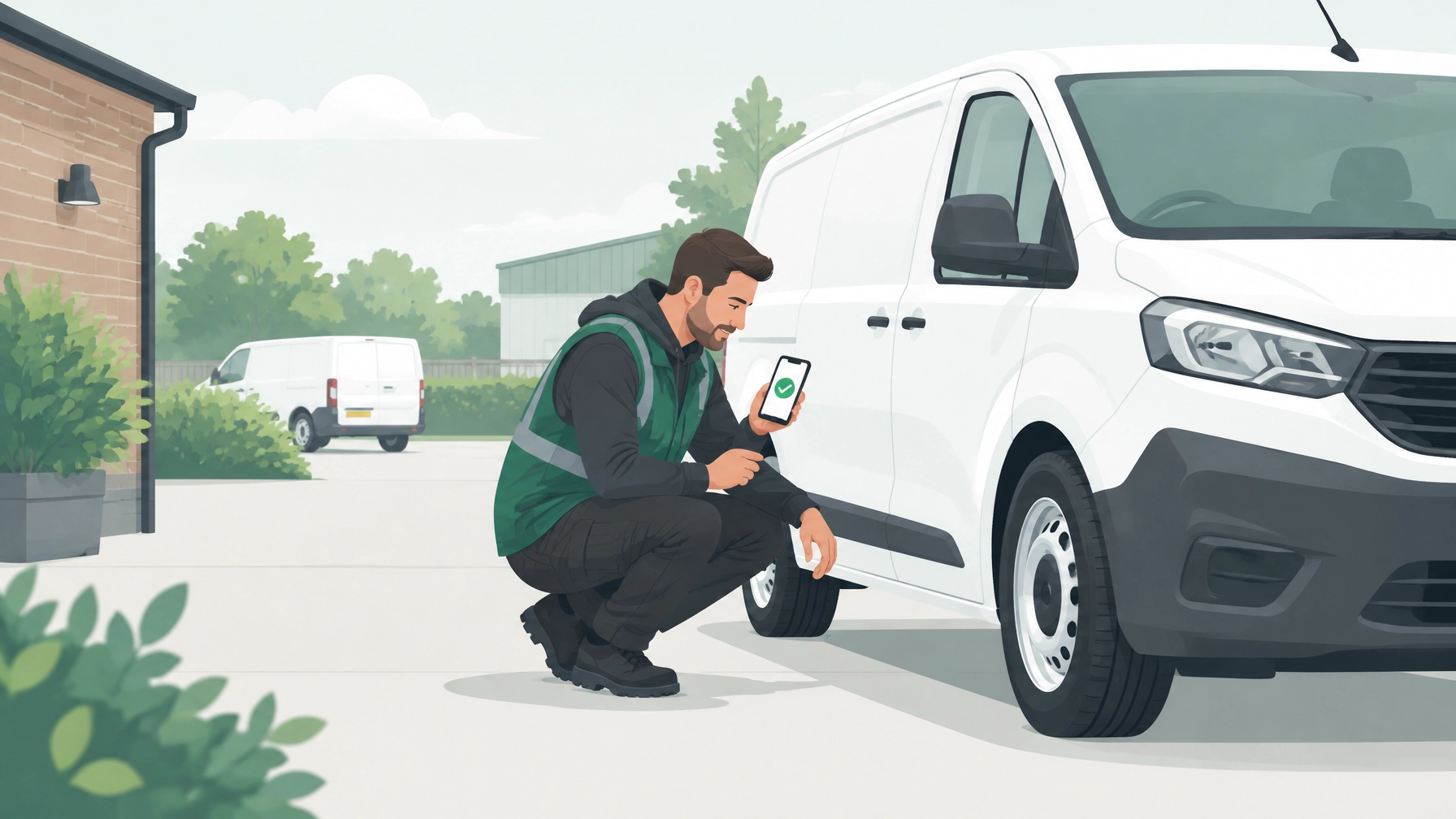
A digital vehicle inspection app can make it easier to submit a check from a phone and keep records together. A photo with a timestamp can show what was reported and when, giving more context than a ticked box alone. It doesn’t prove that every part of the vehicle is safe, or replace a driver’s responsibility to check it properly.

How to make daily checks stick
Try these steps to make driver checks part of the normal start-of-day routine:
- Keep the check short and clear. Focus on useful, visible checks, and make sure drivers know what to do if they find a defect.
- Make reporting straightforward. Drivers should be able to describe the problem and get it to the right person promptly.
- Agree what happens next. Decide who reviews reports, arranges repairs and confirms when a vehicle can be used again.
- Review the records. Look for repeated defects or checks that haven’t been completed, and follow up without turning the process into a blame exercise.
For a small business, one shared process can help keep checks consistent as more vehicles and drivers are added. Motorlane Fleet’s driver checks let drivers scan a QR sticker on the vehicle and complete a guided check on their phone, with nothing to download. Defects can be reported with photos, and each check is logged against the vehicle. The system records checks; owners and drivers remain responsible for roadworthiness.
If you’re running vans for work, see how Motorlane Fleet can support small businesses.
This is general information, not legal advice. Rules can depend on your vehicle and how it’s operated; check the relevant GOV.UK guidance and your insurer.
Motorlane Fleet has a 14-day free trial, with plans from £4.99 a month. Drivers don’t need to download anything.
Try Motorlane Fleet
Reminders, driver checks and accident help for your vehicles, all in one app.
Get started freeMore from the blog
How to Report a Car Accident in the UK: Who to Tell and What to Record
Find out how to report a car accident in the UK, who to contact, when police must be told and what details to record for your insurer or employer.
Read →How to Check and Renew Your Vehicle Tax (Without Losing Track Across Several Vehicles)
Check your vehicle tax for free on GOV.UK, renew it using a V11 or V5C, and keep track of tax dates across several cars or vans.
Read →What Happens If Your MOT Expires: The Practical To-Do List
MOT expired? Follow this practical checklist to check the date, book a test, sort tax and SORN, and understand when you can drive your vehicle.
Read →