Driver Licence Checks for Small Businesses: The Simple Way to Stay on Top of Them
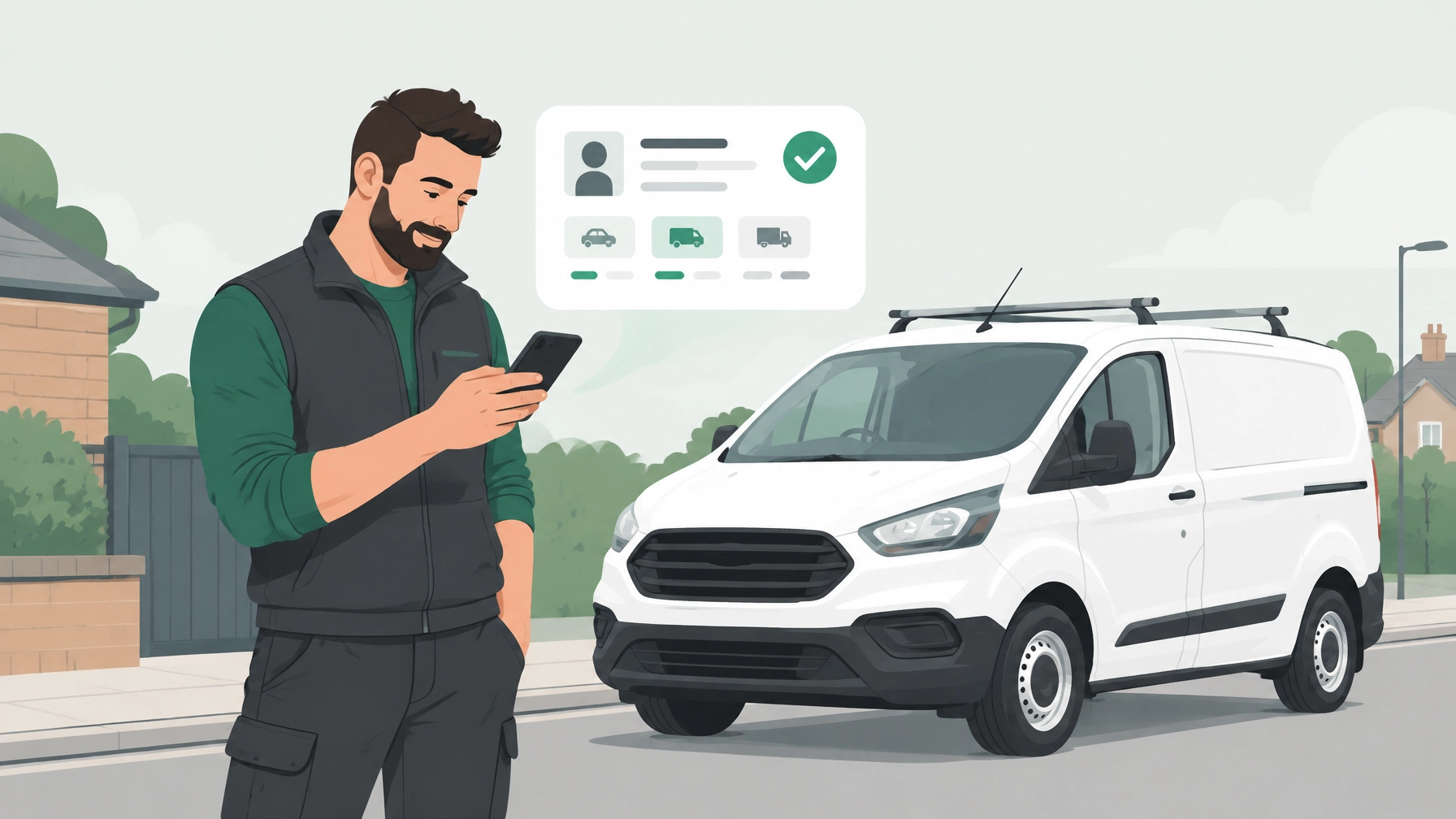
To check a driver’s licence in Great Britain, ask the driver to create a free check code on GOV.UK, then use the official service to view their driving record with the code and the last eight characters of their licence number. The code is valid for 21 days and can only be used once. Northern Ireland licences use a separate DVA service.
It’s a straightforward way to confirm a driver’s entitlements and see penalty points or disqualifications. Here’s how to make licence checks a sensible, repeatable part of running your business.
Why check your drivers’ licences?
If an employee drives for work, you have a duty of care to consider the risks of that work-related driving. Checking licences is accepted good practice, and many insurers and fleet policies expect businesses to do it.
A check can help you spot something you might not otherwise know: a driver has picked up points, their licence doesn’t cover the vehicle they’re assigned, or their photocard is approaching its renewal date. It’s one practical part of managing work driving, alongside suitable vehicles, insurance and clear safety procedures.
There’s no single legal rule that says every small business must check every driver at a set interval. Many businesses check when someone starts driving for work and then repeat the check annually. Treat that as common practice, not a legal timetable, and follow your insurer’s requirements.

How to check a driver’s licence: five steps
For a Great Britain licence, the driver creates a code using the GOV.UK service to view or share driving licence information. They’ll need their licence number, National Insurance number and the postcode on their licence.
- Ask the driver for permission and a check code. The driver generates the code through GOV.UK and shares it with you. You’ll also need the last eight characters of their driving licence number. Don’t try to access someone’s driving information without permission.
- Open the official checking service. Go to GOV.UK’s “Check someone’s driving licence information” service and enter the code and licence details. Use the code within 21 days; it’s single-use, so you’ll need a fresh one for a later check.
- Check the entitlement against the vehicle. Compare the licence categories and any restrictions with the vehicle the person will drive.
- Review points and dates. Note any penalty points or disqualifications, and check the photocard expiry date.
- Record the check and set a review date. Make a brief, secure record of when you checked, the outcome and when you plan to check again.
Drivers can also print a summary of their record. But if you need to check the current official record, use the government service rather than relying on a paper copy.
Checking a Northern Ireland licence
For a Northern Ireland licence, use the nidirect/DVA service to check someone’s NI driving licence information. The driver provides a check code and their licence number. As with the Great Britain service, the code must be used within 21 days and can only be used once.
What should you look for?
Licence categories and restrictions
A category tells you what type of vehicle the driver is entitled to drive. For many cars and light vans, category B is the relevant entitlement. In most cases, it covers petrol, diesel and hybrid vehicles with a maximum authorised mass (MAM) of up to 3,500kg.
MAM is the vehicle’s maximum permitted weight when loaded, not what it happens to weigh on a particular journey. Heavier vehicles may need another entitlement, such as C1. A trailer can affect what the driver is allowed to tow, too; B+E may be needed in some cases. Check the actual vehicle and any restrictions rather than assuming one category covers every van or trailer.
The GOV.UK guide to driving licence categories explains what each category covers. Northern Ireland categories differ, so check NI licences through DVA.
Penalty points or disqualifications
The official record shows penalty points and disqualifications. If something appears that you weren’t expecting, pause before assigning the driver to work-related driving and clarify the situation. Follow your company policy and seek appropriate advice where needed.
Photocard expiry
For most drivers in Great Britain, the photocard must be renewed every 10 years. There are exceptions, including certain medical and vocational licences, so check the individual record. GOV.UK has details on renewing a driving licence.
Keep an eye on the expiry date and ask the driver to take action if renewal is due. A licence check helps you keep track of information; it doesn’t replace the driver’s responsibility to maintain the right entitlement or your responsibility to manage work-driving risks.

How to keep checks organised
With one or two drivers, a diary reminder might be enough. As your team grows, a clear, consistent process makes it easier to see who has been checked and when they’re due again.
Keep a simple record for each driver with:
- The date of the check and who completed it.
- The vehicle types they’re expected to drive and the categories you verified.
- Any follow-up needed, handled in line with your policy.
- A review date, based on your insurer’s requirements and your own risk assessment.
Store only what you need, limit access to the record and handle personal information carefully. Don’t keep check codes for future use: they’re single-use and expire. For the next check, ask the driver for a new one.

If licence expiry dates are one of several vehicle and driver deadlines to keep track of, Motorlane Fleet’s reminders can help you record licence expiry dates alongside MOT, tax, insurance and service reminders. You can read more about keeping business vehicles organised on our small business page.
A quick driver licence check checklist
- Get the driver’s permission and a fresh check code.
- Use the correct service: DVLA for Great Britain, DVA for Northern Ireland.
- Check the entitlement and restrictions against the vehicle.
- Review points, disqualifications and photocard expiry.
- Record the check securely and diarise the next one.
- Follow any insurer or fleet policy requirements.
This is general information, not legal advice. Check the relevant GOV.UK or nidirect guidance and your insurer’s requirements.
Try Motorlane Fleet with a 14-day free trial. Plans start from £4.99 a month.
Try Motorlane Fleet
Reminders, driver checks and accident help for your vehicles, all in one app.
Get started freeMore from the blog
How to Report a Car Accident in the UK: Who to Tell and What to Record
Find out how to report a car accident in the UK, who to contact, when police must be told and what details to record for your insurer or employer.
Read →How to Check and Renew Your Vehicle Tax (Without Losing Track Across Several Vehicles)
Check your vehicle tax for free on GOV.UK, renew it using a V11 or V5C, and keep track of tax dates across several cars or vans.
Read →What Happens If Your MOT Expires: The Practical To-Do List
MOT expired? Follow this practical checklist to check the date, book a test, sort tax and SORN, and understand when you can drive your vehicle.
Read →