Vehicle Maintenance Schedule: A Simple Plan for Cars and Small Fleets
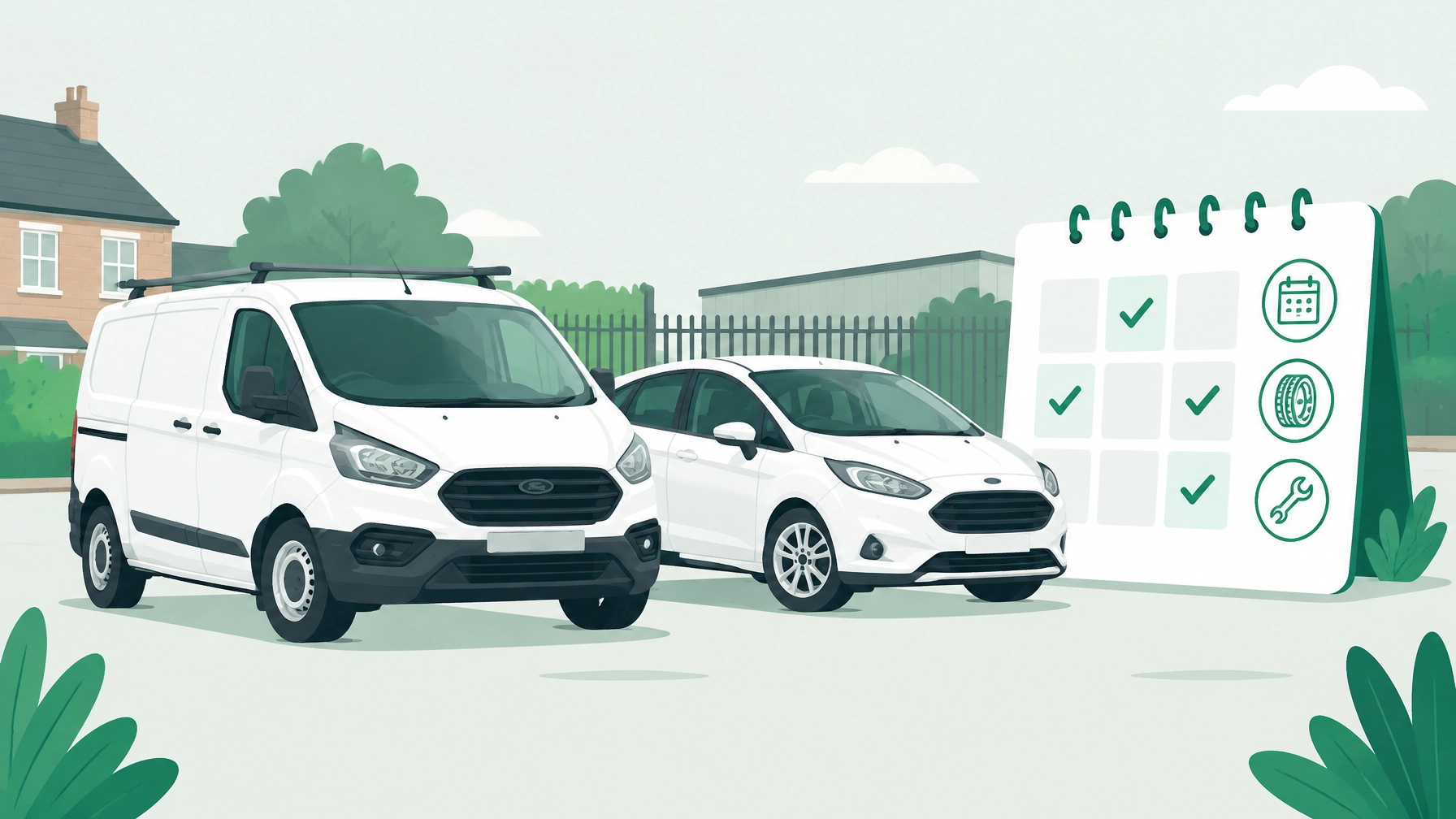
To set up a vehicle maintenance schedule, list each vehicle, record its MOT, tax, insurance and service dates, then add regular checks for tyres, brakes, lights and fluids. Put reminders in a calendar and log completed work, mileage and any defects, so your plan doesn’t depend on someone remembering.
A useful schedule doesn’t need to be complicated. It just needs to make clear what to check, when to check it and what to do if you find a problem.
What should a vehicle maintenance schedule cover?
Build your schedule around two things: checks that help spot problems and dates you must keep track of. The right frequency depends on how each vehicle is used, so follow the manufacturer’s handbook and adjust for high mileage, heavy loads or demanding work.
Before use: a quick walkaround
For a van, check the vehicle before it goes out. Look at the tyres, lights, mirrors, glass, wipers, number plates and any visible leaks. Check that doors are secure and the load is safely restrained. In the cab, watch for warning lights and anything unusual with the brakes or steering.
A documented daily check is a useful habit for cars and light vans, too. For practical steps, see our guide to a van walkaround check.
Monthly: tyres, fluids, lights and condition
Set aside time for a more deliberate check each month, or more often if a vehicle covers a lot of miles. Include:
- Tyres: Check pressure against the vehicle handbook, tread depth and overall condition. Look for cuts, bulges, cracks or other damage. There’s no single age at which every tyre must be replaced, so check the manufacturer’s advice and ask a tyre professional if you’re unsure.
- Tread: For cars and light vans, the legal minimum is 1.6mm across the central three-quarters of the tyre and around its entire circumference. Don’t wait until a tyre reaches the legal limit if it’s damaged or wearing unevenly.
- Brakes: Pay attention to changes in braking, noises or warning lights, and include brake inspections in servicing. Arrange a prompt professional check if something doesn’t feel right.
- Fluids: Check oil, coolant and screenwash as instructed in the handbook. Top up only as directed; if a fluid level keeps dropping, investigate rather than repeatedly topping it up.
- Lights and visibility: Test lights and indicators, and check mirrors, windows, wipers and washers.

By date or mileage: servicing and renewals
Use the vehicle’s handbook or manufacturer’s service schedule for service intervals. Many cars and vans are serviced around every 12 months or 10,000–15,000 miles, but that’s not a universal rule: the correct interval depends on the vehicle and its use.
For each vehicle, record:
- MOT expiry date
- Vehicle tax renewal date
- Insurance renewal date
- Service due date or mileage
- Any other relevant dates, such as a warranty or lease end
Most cars and vans need their first MOT by the third anniversary of registration and an MOT each year after that. Some vehicle types have different requirements, so check the rules for yours. GOV.UK explains when to get an MOT and lets you check MOT history.
Check tax status and renewal details using GOV.UK’s vehicle tax service. Add the renewal date for your insurance policy, too, and give yourself time to review the cover before it expires.
How to build your own vehicle maintenance schedule
- List every vehicle. Write down its registration, make, model and who usually drives it. Include family cars and work vehicles.
- Gather the key dates and intervals. Check MOT and tax details, your insurance documents and the manufacturer’s service schedule. Note mileage-based service limits as well as calendar dates.
- Choose a routine for checks. Set a regular time for monthly checks, and make walkaround checks part of the process before work journeys. Decide who reports defects and who arranges repairs.
- Set reminders with enough notice. Add alerts for MOT, tax, insurance and servicing. Include a follow-up reminder where a booking or repair needs arranging.
- Log what’s done. Record the date, mileage, work or check completed, defects found and any repair or next due date. Keep invoices and other useful records with the vehicle’s details.

Why spreadsheets and memory can let you down
A spreadsheet can be a perfectly good place to start, but it takes regular attention. As you add vehicles, dates can end up scattered across different tabs, old emails or paper folders. If the person who knows the system is away, someone else may not know what’s due.
It can also be hard to show what checks were completed and what happened after a defect was reported. A useful vehicle maintenance log should connect each check or job to a vehicle and date, with enough detail to follow up.
Try to keep records in one consistent place, whether that’s a shared calendar, a paper log or fleet software. If you manage the running costs as well, a cost-per-vehicle record can help you see what you’ve spent on servicing, repairs and fuel.
What’s required by law, and what’s good practice?
MOT and vehicle tax requirements depend on the vehicle and whether it’s used or kept on public roads. Insurance is also required for most vehicles used on public roads; check the rules that apply to your circumstances. GOV.UK provides guidance on vehicle tax and MOT requirements.
Documented daily walkaround checks are a condition of the operator’s licence for HGVs and buses. For cars and light vans, a documented daily check is recommended rather than specifically mandated. It’s still a practical way to spot defects and keep a record. The GOV.UK guidance on van daily walkaround checks explains the checks drivers should make.
An MOT pass or a completed checklist doesn’t guarantee that a vehicle remains safe to drive. Owners and drivers are responsible for the vehicle’s condition, and a safety concern needs attention before the vehicle is used.
Keep the plan easy to follow
The best schedule is one people will use. Give each vehicle a clear record, make it straightforward for drivers to report problems, and review upcoming dates regularly.
Motorlane Fleet can pull MOT dates from the DVSA and send reminders 30, 14 and 7 days before MOT, tax, insurance and service dates. Drivers can complete 60-second phone-based walkaround checks by scanning a QR sticker, with nothing to download; the system tracks dates and checks, but owners and drivers remain responsible for the vehicle. See reminders and compliance, and find options for families, small businesses and fleets. For driver check tools, accident reporting and steps to take after an incident, see our accident guide.

For more help planning vehicle upkeep, read our guide to MOT advisories.
This is general information, not legal advice; check GOV.UK and your insurer for guidance that applies to your vehicles. Try Motorlane Fleet with a 14-day free trial, with plans from £4.99 a month.
Try Motorlane Fleet
Reminders, driver checks and accident help for your vehicles, all in one app.
Get started freeMore from the blog
How to Report a Car Accident in the UK: Who to Tell and What to Record
Find out how to report a car accident in the UK, who to contact, when police must be told and what details to record for your insurer or employer.
Read →How to Check and Renew Your Vehicle Tax (Without Losing Track Across Several Vehicles)
Check your vehicle tax for free on GOV.UK, renew it using a V11 or V5C, and keep track of tax dates across several cars or vans.
Read →What Happens If Your MOT Expires: The Practical To-Do List
MOT expired? Follow this practical checklist to check the date, book a test, sort tax and SORN, and understand when you can drive your vehicle.
Read →