Pre-MOT Checklist: How to Prepare in the Week Before Your Test
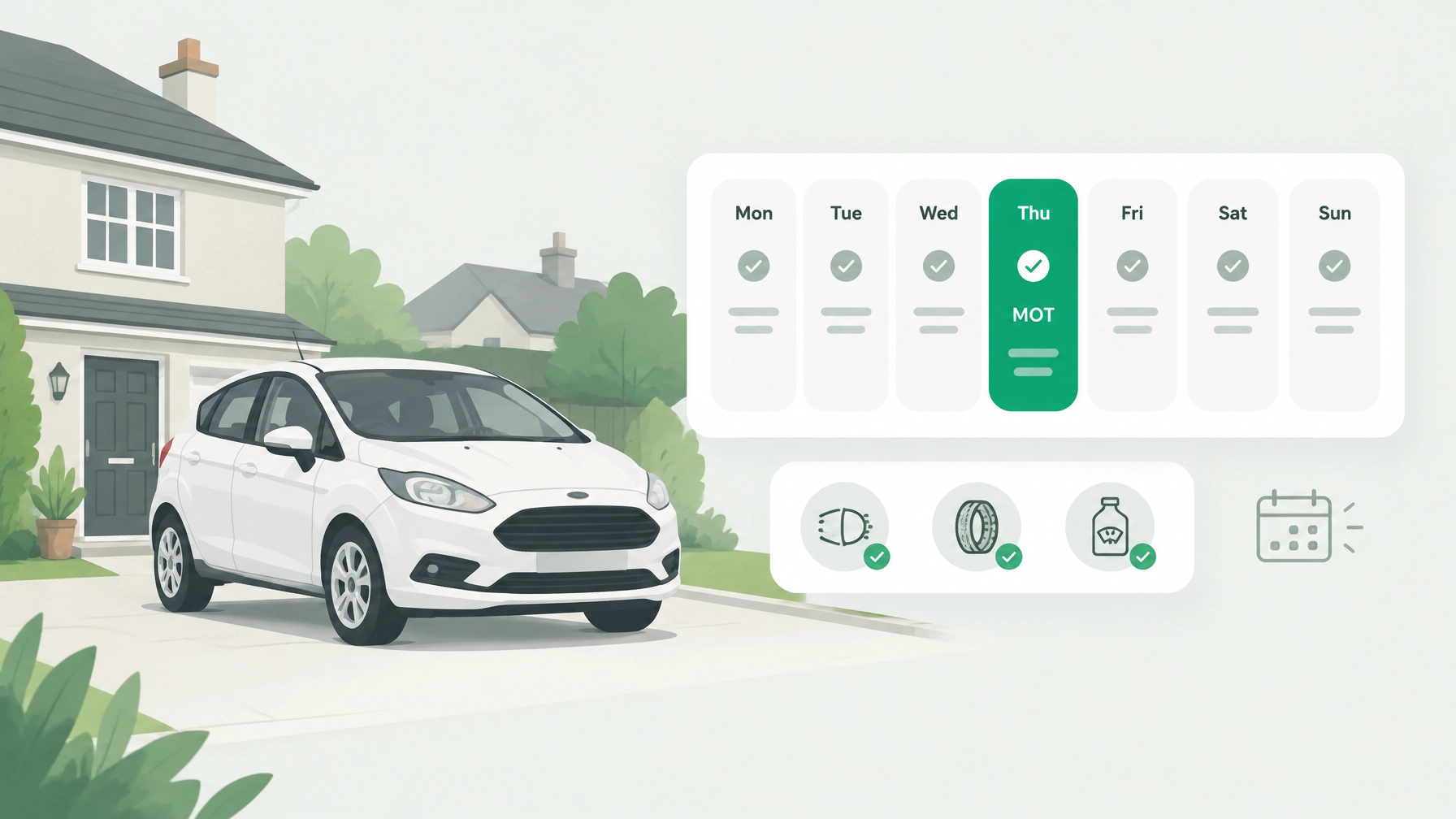
To prepare for an MOT, book your test early, do a quick walk-round and sort any obvious faults as soon as you spot them. Use the week before the appointment to check the basics, arrange garage help for anything you’re unsure about and arrive with the vehicle clean, accessible and ready to test.
This timeline helps you spread the jobs out, rather than rushing through them on the morning of the test. It can reduce avoidable surprises, but no home check can guarantee a pass.
Your pre-MOT checklist: a week-by-week plan
- Seven days before: check the date and do a first walk-round
- Check your MOT expiry date using the GOV.UK MOT history service, then make sure you have a test booked.
- Walk around the car and look for obvious problems. Check that the lights work, the tyres look in good condition and the windscreen, mirrors and number plates are clean and undamaged.
- Ask someone to help you check the brake lights while you press the pedal. Check the tyre tread and pressures, too. The legal minimum tread depth for cars and light vans is 1.6mm across the central three-quarters of the tyre, around its entire circumference.
- If you spot a failed bulb or an empty washer bottle, deal with it early. If you notice a warning light, poor braking, unusual noises or damaged tyres, ask a garage for advice rather than relying on a quick driveway check.

Two days before: speak to the garage about anything concerning
- If you’ve noticed a fault, call the garage and describe what happens, when you first noticed it and whether it’s intermittent. Mention warning lights, changes in braking or steering, unusual noises, smoke and any recent repairs.
- If the car has an advisory from its last MOT, tell them whether it was repaired. A previous advisory isn’t proof of a current fault, but it can help the garage understand what’s been checked.
- Ask whether the garage offers a pre-MOT inspection, what that includes and whether they’ll contact you before carrying out repairs. Confirm the test appointment and how to get the vehicle there if you’re worried it may not be safe to drive.
The day before: make the car easy to test
- Clean the windscreen, mirrors, lights and number plates. Clear rubbish and unnecessary items from the car so the tester can access what they need.
- Top up the screenwash and check the fuel and engine oil. Follow your vehicle handbook for checking oil, and don’t overfill it.
- Put your booking confirmation somewhere handy. You don’t need to bring an old MOT certificate: the vehicle’s MOT record is held online. If useful, bring a previous advisory or a note about work you’ve had done, but these aren’t a substitute for the test.

- The morning of the test: do a final check and set off safely
- Check that you have enough fuel and oil for the test and that the vehicle is reasonably clean and clear inside.
- If it’s safe and practical, drive normally for a short while before the appointment so the engine is warm. This can help with the emissions part of the test, particularly for diesel vehicles.
- Take the booking details and allow enough time to arrive without rushing. If a fault makes you think the car may not be safe to drive, call the test centre or a garage for advice instead.
Book early and keep your MOT renewal date
In Great Britain, you can get an MOT up to one month minus a day before the current certificate runs out and keep the same renewal date for the following year. For example, if your MOT expires on 15 May, 16 April is the earliest test date that preserves the same renewal date.
You can book earlier, but if the car passes, its next expiry date will move to one year minus a day from the date it passed. Check the current GOV.UK guidance on when to get an MOT before booking. Different arrangements apply if the last MOT was in Northern Ireland and the next test is in Great Britain.
Booking with time to spare gives you more room to arrange repairs if you need them. You can use an MOT test centre that only tests vehicles, or one that also carries out repairs. If you choose a repair centre, ask what repairs would cost and make sure you agree to any work before it goes ahead.
What to tell the garage
Give the tester or garage useful details, without trying to diagnose the problem yourself. Mention:
- Warning lights that stay on or appear while driving.
- Changes in braking, steering or handling.
- Unusual knocks, squeals, smoke or fluid leaks.
- Previous MOT advisories and any repair work you’ve had done.
A clear description can help the garage investigate a concern. If something only happens occasionally, say when you tend to notice it.
What if the car fails its MOT?
The tester records any problems as dangerous, major, minor or advisory. Dangerous and major defects mean the vehicle fails. Minor defects and advisories are noted, but don’t on their own mean a fail. Deal with any problem affecting safety promptly, even if the car passes.
If the car fails, check the result and ask the garage what needs fixing. You can appeal if you believe the test result is wrong; follow the GOV.UK process for challenging an MOT result.
Driving rules depend on the result and whether the previous MOT is still valid. GOV.UK says you can take the vehicle away if its current MOT is still valid and no dangerous problems were listed, but it must remain roadworthy. If the MOT has expired, there are limited exceptions for travelling to a pre-arranged test or place of repair, but the vehicle must still be safe to drive. Don’t drive a vehicle with a dangerous defect; arrange repairs or suitable transport.
Want the detailed checks?
This guide focuses on when to prepare, not every item the tester examines. For a fuller walk-round, see our MOT checklist: what to check before your test, and read about common MOT failures and the quick checks that can help you spot them.
If you manage several vehicles, Motorlane Fleet pulls MOT dates from the DVSA and sends reminders 30, 14 and 7 days before they’re due, giving you time to plan. Reminders help you keep track; owners and drivers remain responsible for their vehicles and checks. Find out about MOT reminders.
Try Motorlane Fleet free for 14 days, with plans from £4.99 a month. Drivers don’t need to download an app, and you can see all plans and pricing.
This is general information, not legal advice. MOT rules can change; check GOV.UK for current guidance.
Try Motorlane Fleet
Reminders, driver checks and accident help for your vehicles, all in one app.
Get started freeMore from the blog
How to Report a Car Accident in the UK: Who to Tell and What to Record
Find out how to report a car accident in the UK, who to contact, when police must be told and what details to record for your insurer or employer.
Read →How to Check and Renew Your Vehicle Tax (Without Losing Track Across Several Vehicles)
Check your vehicle tax for free on GOV.UK, renew it using a V11 or V5C, and keep track of tax dates across several cars or vans.
Read →What Happens If Your MOT Expires: The Practical To-Do List
MOT expired? Follow this practical checklist to check the date, book a test, sort tax and SORN, and understand when you can drive your vehicle.
Read →