Van Check: The 2-Minute Routine Before You Drive Off
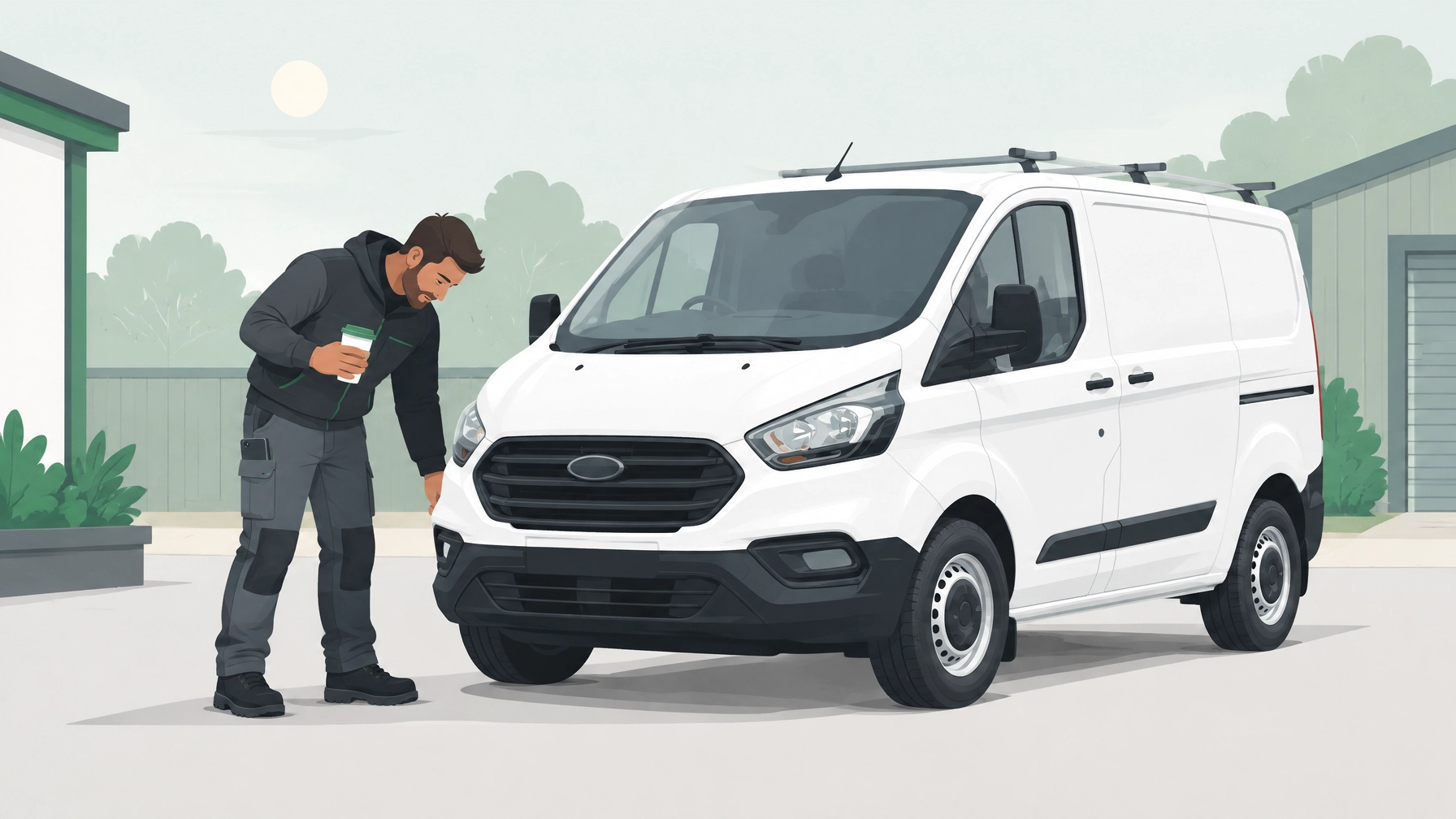
Before driving off, check your lights, tyres, mirrors and glass, load, fuel and fluids, and dashboard warning lights. This quick van check is a useful first look for a tradesperson starting the day or a family setting off on a longer trip; if anything seems unsafe, take the time to investigate rather than rushing on.
Meta description: A practical two-minute van check before you drive: what to look at, how to check a load, and the small seasonal checks that can help.
A quick van check before you set off
A familiar vehicle can make it easy to miss a change. A new scuff, soft-looking tyre or light that’s stopped working may be easier to spot when you pause and take a fresh look.
This routine is a quick first pass, not a substitute for your vehicle handbook or a more thorough check if something looks or feels wrong. Some checks will take longer than two minutes, especially if you find a problem.
The 2-minute pre-drive routine
Walk around the van. Take a moment to look at the whole vehicle, including underneath if it’s safe to do so. Notice new damage, loose panels, leaks or anything that looks different from the day before. Fresh eyes can catch what familiarity hides.
Check the lights and indicators. Switch them on and check that the lamps and indicators work. For brake lights, ask someone to help, or use a reflection against a wall or another suitable surface. Make sure the lenses are clean and not damaged.
Look at the tyres and wheels. Check each tyre for cuts, bulges or anything embedded in the tread, and look for a tyre that appears flatter than the others. A quick press or feel can alert you to an obvious problem, but it won’t confirm the pressure. Use a gauge and the pressure recommended in your handbook or on the vehicle’s information label, particularly before carrying a heavier load.
For cars and light vans, the legal minimum tread depth is 1.6mm across the central three-quarters of the tyre and around its full circumference. If you see exposed cord, a bulge or other serious damage, don’t assume it’s safe to drive.
Check glass, mirrors and washers. Make sure the windscreen and mirrors are clean, clear and secure. Check that your view isn’t blocked by objects, and that the wipers and washers work. Top up screenwash if needed.
Settle in and check the cab. Adjust your seat and mirrors before moving, fasten your seatbelt and check that any passengers are belted up. Once the engine is running, pay attention to warning lights and make sure you have enough fuel for your journey. Don’t ignore a warning light you don’t recognise: check the handbook before setting off.
GOV.UK advises drivers to check that the windscreen, windows and mirrors are clean, the lights work and the brakes work every time they drive. Its vehicle safety guidance also explains the checks to follow for tyres and fluids.
Before a big job or a long trip: check the load
A van can feel different to drive when it’s carrying a heavy or uneven load. Before setting off, check that the load is within the vehicle’s permitted weight rating, often shown on a plate or in the handbook. Don’t guess from how full the load area looks: tools, passengers and other items all add weight.
Put heavier items low, distribute weight sensibly and secure everything so it can’t slide or fall during braking or cornering. Make sure the load doesn’t block your view, lights or number plate, and that doors are shut and secured.
An overloaded or loose load can affect how the van handles and is a genuine safety risk. For more on the rules, see GOV.UK’s guidance on securing loads on goods vehicles.

Add a couple of checks for the season
Your quick routine can stay much the same through the year, with a few extra things to think about when the weather changes.
In winter, check that screenwash is suitable for cold weather, your battery is in good condition and your lights are working. With darker mornings, it’s especially easy to miss a failed lamp. Clear ice and condensation from the glass, mirrors and lights before setting off, rather than relying on a small viewing gap.
In summer, keep an eye on the cooling system and look out for signs of leaks. Check tyre pressures with the vehicle cold and use the handbook’s guidance for the load you’re carrying. If you’re unsure about coolant, check the handbook and only inspect or top it up as directed; never open a hot cooling system.

A quick habit for you; a record for your team
For a family or a one-van business, this short pre-drive routine can help you notice changes before a journey. If you find a fault that could make the vehicle unsafe, don’t set off until you’ve dealt with it.
For teams, a proper walkaround check with a record is worth building into the working day. Our van walkaround check guide covers the fuller checklist, while Daily Vehicle Checks: What to Check, What the Law Says, and How to Make Them Stick explains the routine and record-keeping side.
Motorlane Fleet lets drivers complete daily walkaround checks on their phone by scanning a QR sticker, with nothing to download, and report defects with photos. It can help turn a habit into a record, but the system doesn’t make a vehicle roadworthy: owners and drivers remain responsible.
This is general information, not legal advice; check the relevant GOV.UK guidance and your insurer for your situation. You can try Motorlane Fleet free for 14 days, with plans from £4.99 a month.
Try Motorlane Fleet
Reminders, driver checks and accident help for your vehicles, all in one app.
Get started freeMore from the blog
How to Report a Car Accident in the UK: Who to Tell and What to Record
Find out how to report a car accident in the UK, who to contact, when police must be told and what details to record for your insurer or employer.
Read →How to Check and Renew Your Vehicle Tax (Without Losing Track Across Several Vehicles)
Check your vehicle tax for free on GOV.UK, renew it using a V11 or V5C, and keep track of tax dates across several cars or vans.
Read →What Happens If Your MOT Expires: The Practical To-Do List
MOT expired? Follow this practical checklist to check the date, book a test, sort tax and SORN, and understand when you can drive your vehicle.
Read →